
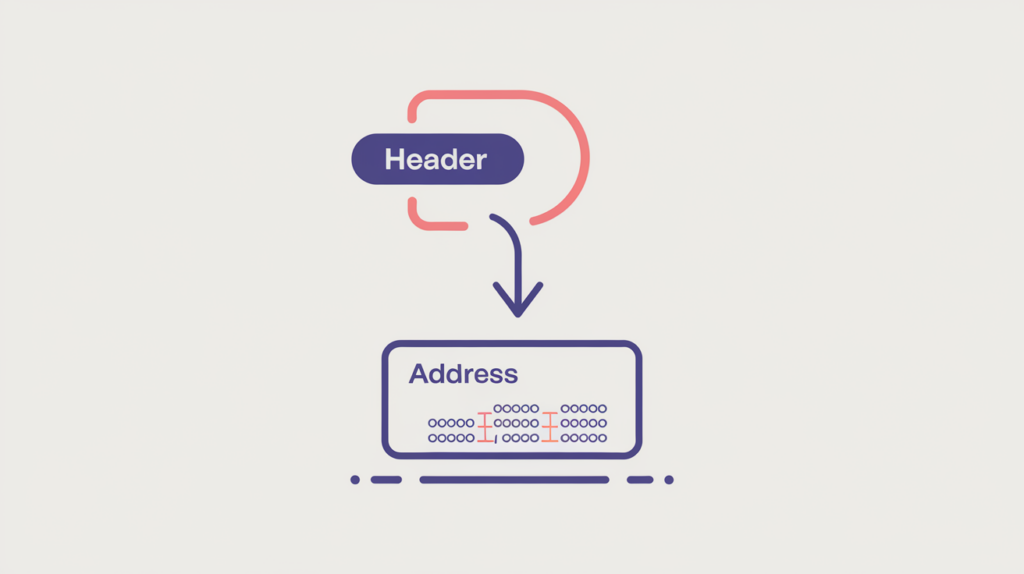
Variations in Header Tags counts how many keyword variations appear in a page’s markup — but despite the name, the current implementation reads the contents of <address> elements, not <header> elements. It returns a whole-word variation occurrence count, and that count can simply duplicate the Variations in Address Tags factor. Treat it as an observation, not a target.
| Factor ID | RG-KWD-058 |
|---|---|
| Family | Keyword usage & density |
| Measurement | Variation occurrence count |
| Measured zone | Raw captured address contents |
What it measures
Despite its display name, this is a compatibility factor. It does not read <header> markup. Instead it counts the number of keyword variations that occur inside the page’s <address> element contents. The name is retained for continuity with older result sets; the behavior it actually reports is address-scoped variation counting.
How RankGear measures it
RankGear reuses the same <address> tag pattern and the same second capture group as the Variations in Address Tags factor. It then counts case-insensitive whole-word matches of the keyword variations against that captured text, without cleaning the capture first — so any nested markup inside the <address> element is left in place and counted as-is.
What RankGear looks for
<address>
  Contact <strong>Example Roofing</strong> — roofing repair, roof repair
</address>
The captured region is the inner content of the <address> element (the second capture group of the address pattern). Whole-word variation matches inside that region are counted case-insensitively; the inline <strong> tag above is not stripped before counting.
How to optimize it
Do not change your header markup to move this number — header markup has no effect on it. Because the value is derived from <address> content and often mirrors the Variations in Address Tags factor, treat it as an observation rather than a target. Use the <address> element semantically, for genuine contact information, and judge actual heading relevance through the factors that truly parse heading tags.
Important considerations
- The implementation does not parse
<header>tags at all, despite the factor name. - Its value can duplicate the “Variations in Address Tags” factor, since both read the same captured region.
- Nested markup inside the
<address>element remains in the capture and is not cleaned before counting. - This behavior is preserved intentionally for legacy result compatibility.
- Correlation is not causation: this count tracks a pattern within a measured result set and is a prioritization signal — it does not by itself make a page rank.
Related factors
Part of the Factors reference · how RankGear measures · glossary.