
Blog
SEO topics & testing results
Evidence-led writing on SEO, and our own controlled experiments — published with their method, sample, and date.
-
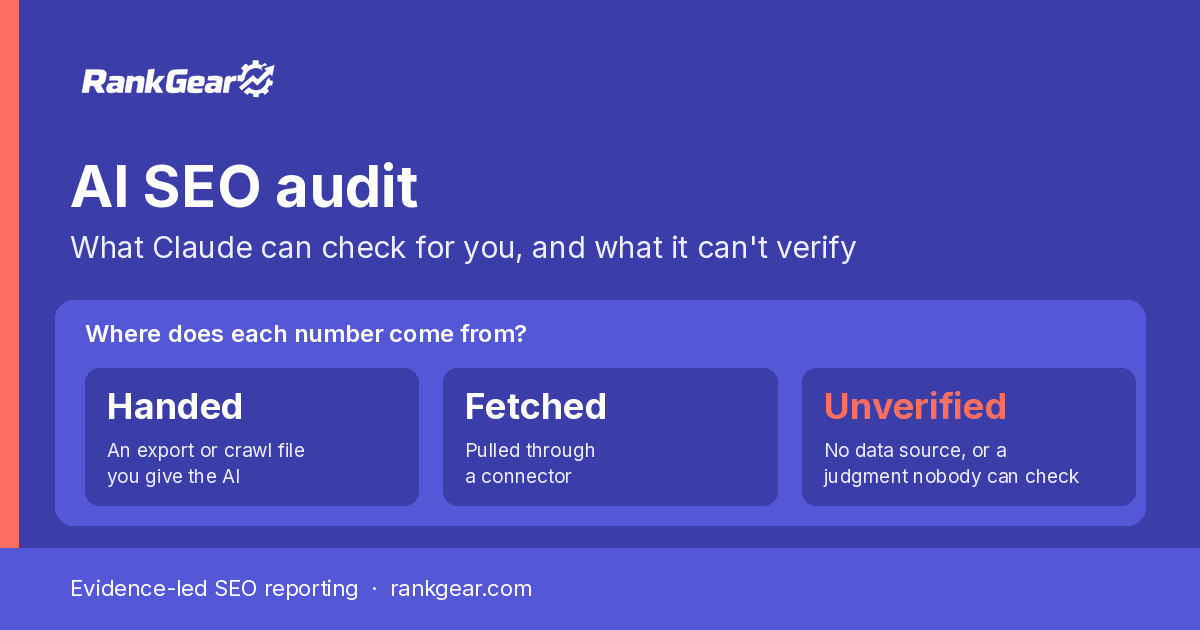
AI SEO audit: what Claude can check for you, and what it can’t verify
An AI SEO audit is only as good as its data. See what Claude can check from real exports, what it can’t verify, and how to test each finding.
-
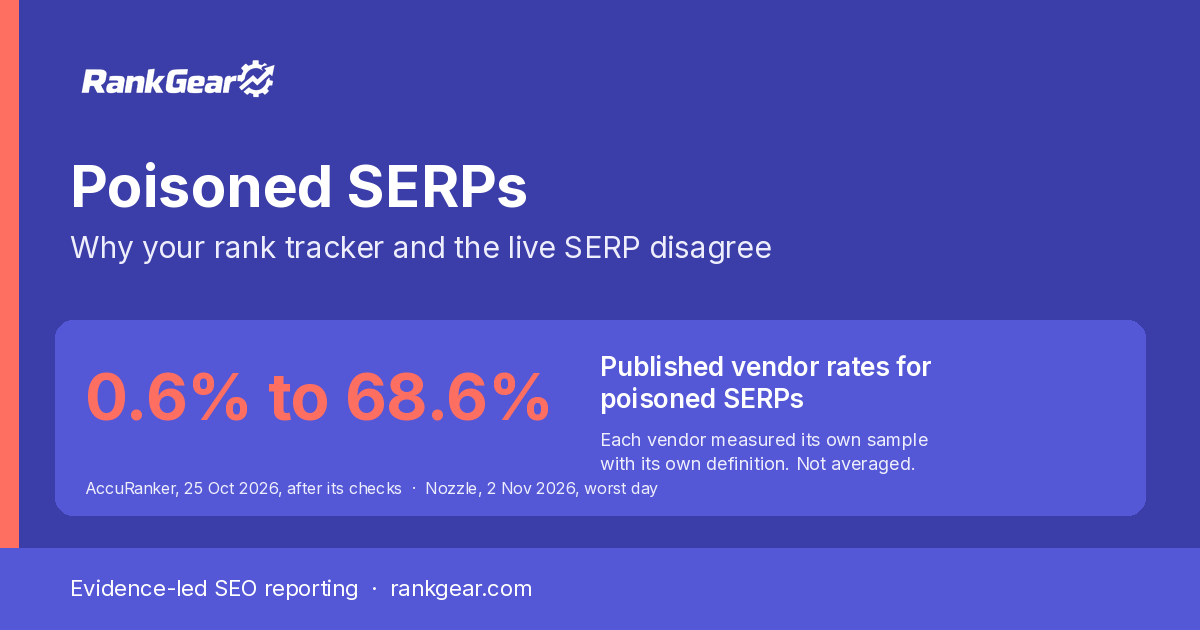
Poisoned SERPs: why your rank tracker and the live SERP disagree
Since mid-September 2026, vendors report that rank trackers get normal-looking Google pages with swapped results. Learn how to check a ranking drop.
-
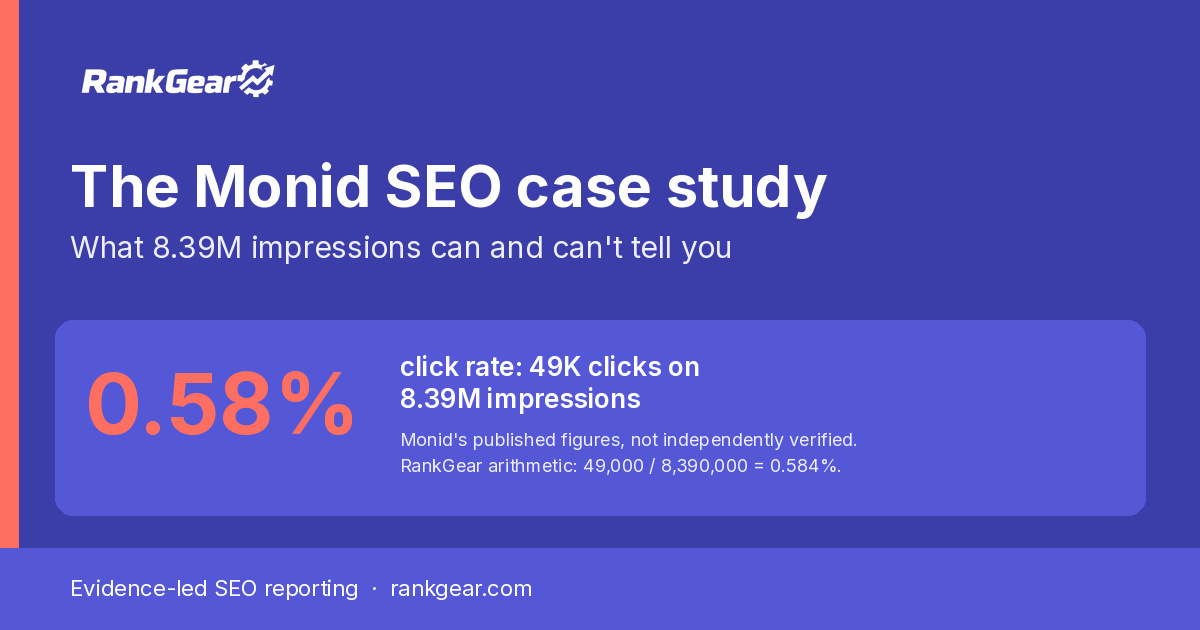
The Monid SEO case study: what Monid is, and what 8.39M impressions can and can’t tell you
Monid says an agent took one site to 8.39M impressions. What Monid is, what the Search Console graphic can show, and what to ask before you trust it.
-
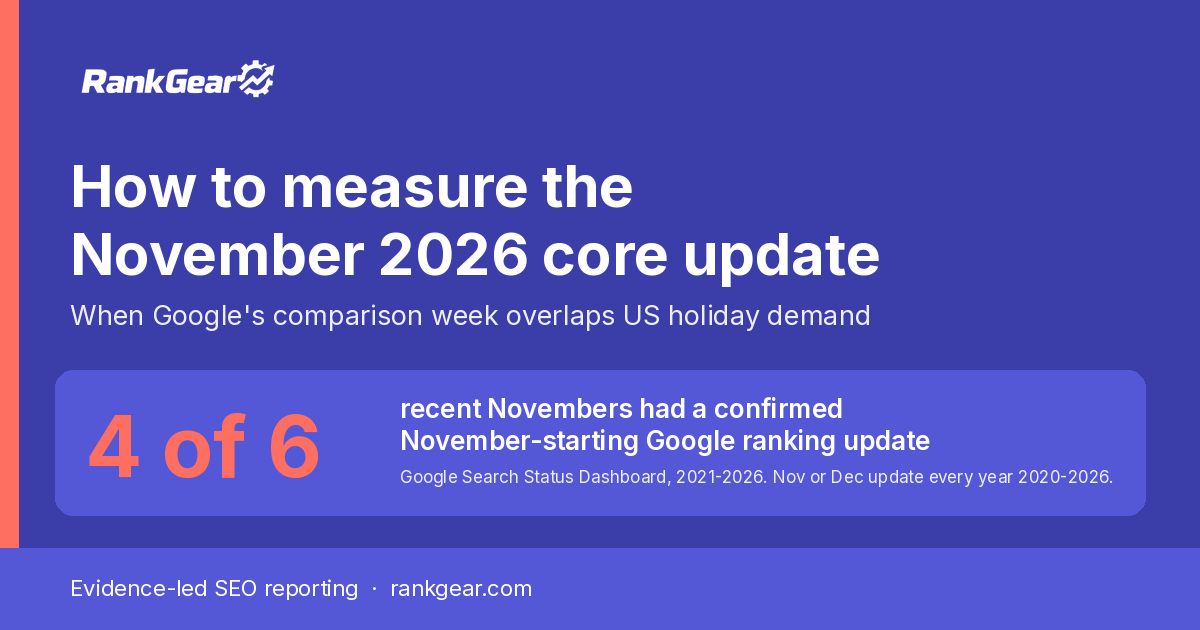
How to measure the November 2026 core update when the official window overlaps US holiday search demand
Google’s comparison week for the November 2026 core update may land on US Thanksgiving. Add a noise baseline and a demand check before you call a winner.
-
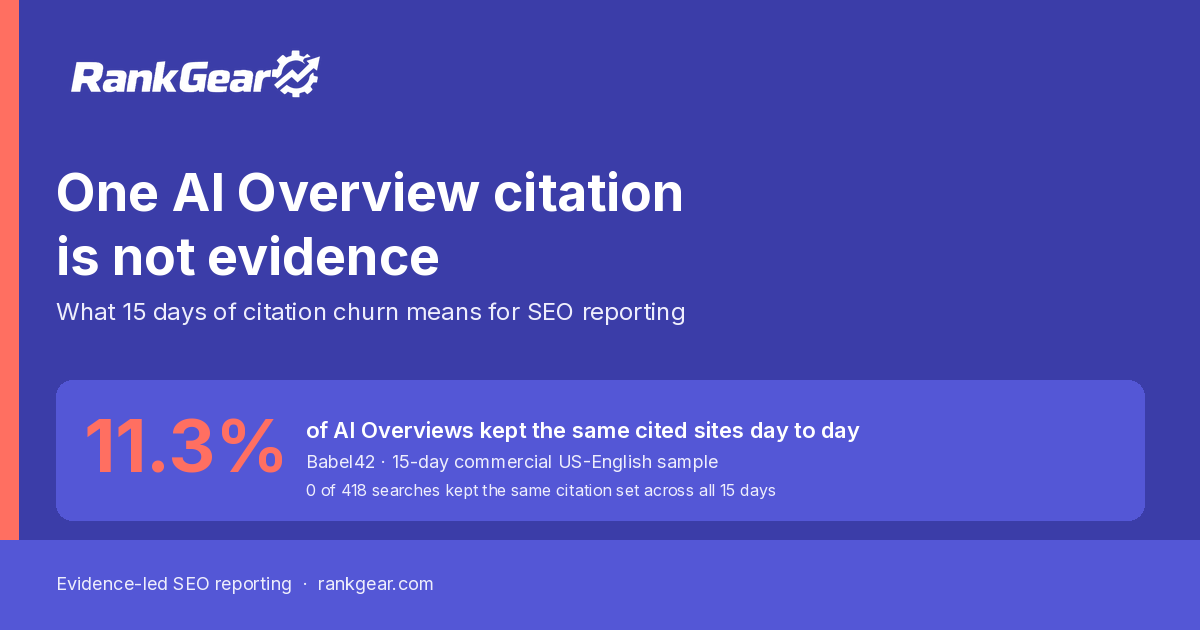
One AI Overview citation is not evidence: what 15 days of citation churn means for SEO reporting
Babel42’s 15-day panel shows only 11.3% of AI Overviews keep the same cited sites day to day. Report citation frequency, not a one-day screenshot.
-
The 928-factor catalogue, counted by family
RankGear catalogues 928 ranking factors across 24 families. The full distribution, how each factor is measured, and what the shape does not prove.
-

How we run a controlled SEO experiment
Correlation shows where to look; a controlled test shows what actually moved. The single-variable method RankGear uses to turn a hunch into evidence — one change, isolated across independent pages, read on a live leaderboard.
-

Correlation vs causation in SEO: how to read a ranking-factor study
A ranking-factor study shows two things moving together — not one causing the other. How to read those correlations without overclaiming, and where evidence ends and proof begins.