
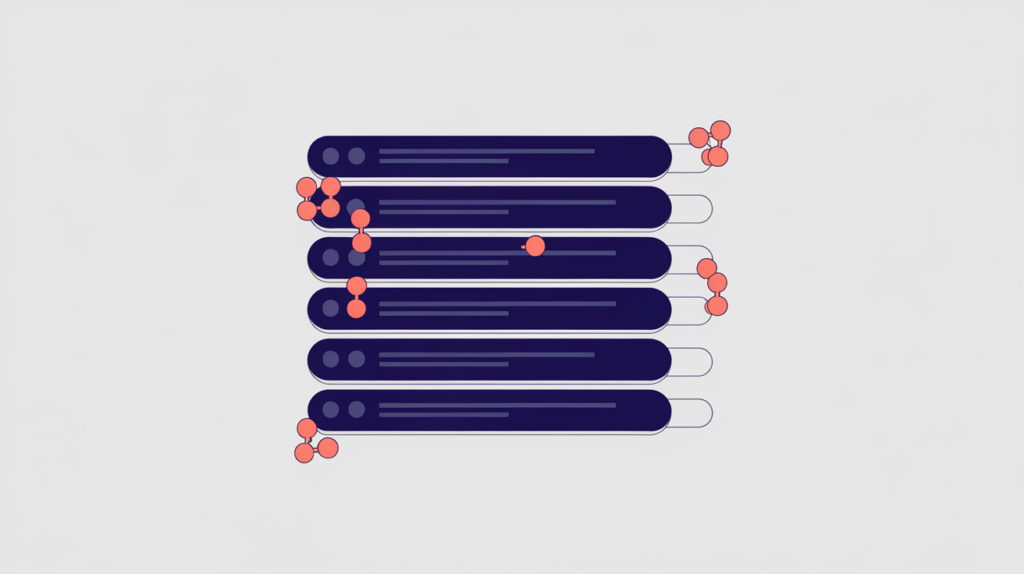
Entities in H2 Tags counts how many times your run’s entities appear across all of a page’s H2 headings. It returns an occurrence count — every repeated mention adds to the total — so a higher number reflects the volume of entity mentions in H2s, not how many distinct entities you used.
| Factor ID | RG-ENT-003 |
|---|---|
| Family | Entities |
| Measurement | Occurrence count |
| Measured zone | H2 text in the rendered page body |
What it measures
This factor counts occurrences of the run-supplied entities across a page’s H2 headings. It looks only at the text inside H2 elements, and it totals every match rather than tallying how many separate entities were found. The result is a single number describing how heavily your entity set shows up in second-level headings.
How RankGear measures it
RankGear extracts every H2 from the rendered page body and, for each entity in your list, sums case-insensitive, word-aware matches within that H2 text. Repeated occurrences all count toward the total, and an empty entity list returns 0. Because matching is word-aware, an entity is matched on whole-word boundaries rather than as an arbitrary substring.
| Count | How to read it |
|---|---|
| 0 | No entity mentions in any H2 — either the H2s don’t reference your entities or the entity list is empty. |
| Low (1–2) | A few H2s name your entities, typically where a section is genuinely about that entity. |
| Higher | Entities appear across many H2s, or the same entity is repeated. Read this against how many distinct sections your page actually has. |
How to optimize it
Use relevant entities in your H2s when they accurately label distinct sections and help clarify the topical relationships on the page. Treat this count as an observation about your heading structure, not a target to maximize — padding H2s with entity names to raise the number works against clear, section-appropriate headings. Let the usefulness of each section govern its wording first, and let the count follow.
Important considerations
- This is an occurrence count, not a unique-entity count — two H2s naming the same entity contribute two, not one.
- Repetition can inflate it, so a high number does not necessarily mean broad entity coverage.
- Your entity providers and run settings determine the entity list, so the same page can score differently across runs.
- Section usefulness should govern how you word H2s; the count is a downstream reflection of that, not a goal in itself.
- This is a correlation-based prioritization signal within a measured result set. It relates to position among analyzed pages — it does not by itself make a page rank or guarantee any ranking.
Related factors
Part of the Factors reference · how RankGear measures · glossary.