
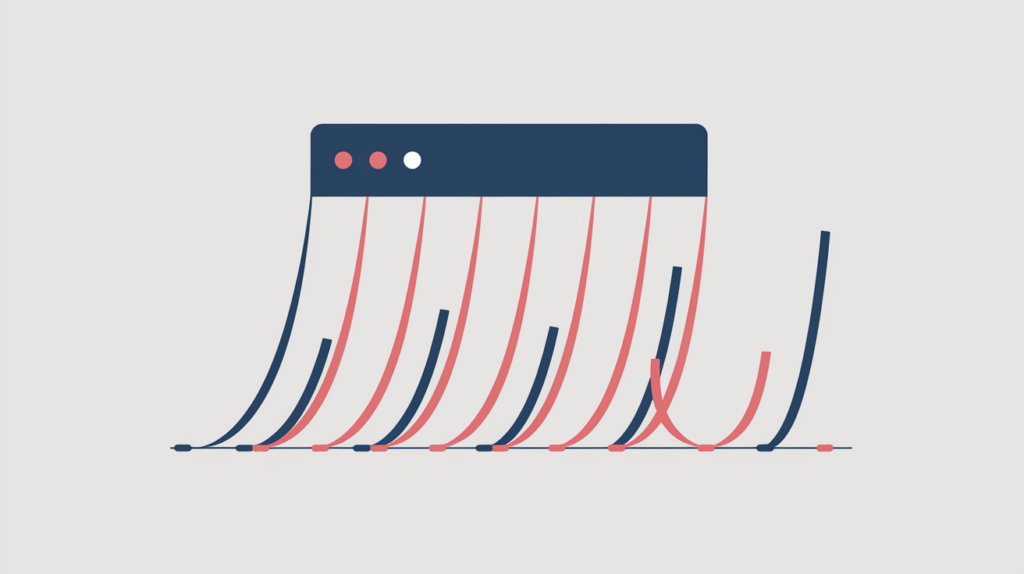
H1 Terms Supported Beyond H1 reports the share of meaningful H1 terms that recur outside the H1 itself. RankGear subtracts each term’s H1 occurrences from its body frequency first, which prevents the heading from supporting itself.
| Factor ID | RG-HLP-013 |
|---|---|
| Family | Helpful content evidence |
| Measurement | Percentage |
| Measured zone | H1 and rendered body copy |
What it measures
This factor checks whether the concepts introduced by the main heading are actually developed in the content beneath it. The self-subtraction is the important detail: without it, every H1 would appear fully supported simply by existing.
How RankGear measures it
RankGear subtracts each H1 term’s H1 occurrences from its body frequency, then calculates supported distinct H1 terms divided by all distinct H1 terms, multiplied by 100.
How to optimize it
Use the body to explain the important concepts introduced by the main heading. Prefer useful detail, examples, evidence and relationships over mechanical repetition — the measurement rewards development, and repetition is the cheap imitation of it.
Important considerations
- This is a lexical proxy; legitimately concise headings can score low.
- Synonymous body language is not recognised as support.
- The H1’s own occurrences are excluded by design, so the heading cannot support itself.
- This is a measured correlation within a result set, not a guarantee: the value relates to how the pages ranking for your query are built — it does not, on its own, make a page rank.
Related factors
Part of the Factors reference · how RankGear measures · glossary.