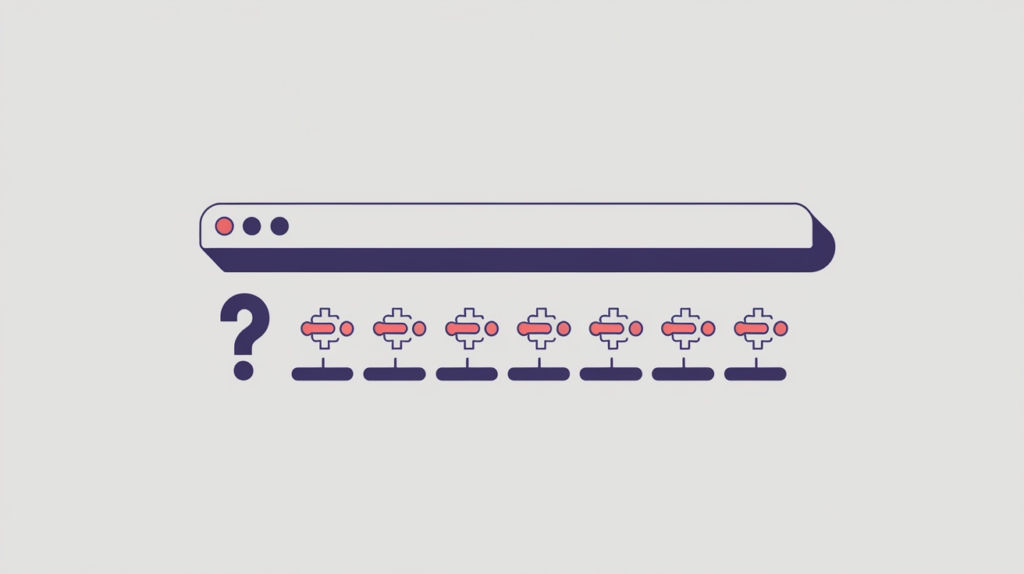
This factor counts how many times your keyword variations appear inside the query-parameter portion of a result URL — the part after the ?. It is a plain occurrence count, not a quality score, and a higher number does not make a page rank; it only describes what RankGear observed in the measured URLs.
| Factor ID | RG-SRP-049 |
|---|---|
| Family | Search Result URL |
| Measurement | Count |
| Measured zone | Parsed result URL query parameters |
What it measures
RankGear counts keyword-variation occurrences that fall specifically within the result URL’s parsed query parameters — the key/value pairs in the query string. It ignores the domain, path, and fragment, isolating only what appears after the ?. The value is a raw count of matches for the run’s variation set inside that zone.
How RankGear measures it
RankGear applies the run’s generated variation matcher to the lowercased query string, or to an empty string when the URL carries no query. Whatever the matcher counts across that lowercased query text is the value returned for this factor.
How to read it
| If the count is… | What it tells you |
|---|---|
| 0 | No variation matched in the query string — the URL has no query, or its parameters carry no keyword variation. Common and often fine for clean, path-based URLs. |
| 1 or more | One or more variations were matched inside the query parameters. Read it as an observation about ranking URLs in this run, not a target to inflate. |
How to optimize it
Treat this as an observation rather than a target. Use descriptive, stable URL components that support real navigation, tracking, and topic clarity — not query strings engineered to raise a count. Do not stuff variations into query parameters, and do not rewrite established URLs merely to push this number up; the cost of doing so almost always outweighs any perceived gain.
Important considerations
- The run’s generated variation set determines what can match — a different variation set produces a different count for the same URL.
- URL parsing and public-suffix handling determine where components begin and end, which decides what text is treated as query parameters at all.
- Repeated or overlapping matches are counted the way the legacy variation matcher handles them, so counts follow that matcher’s behavior rather than a strict de-duplicated tally.
- Changing URLs to influence this factor can create redirects, duplication, and signal loss if not managed carefully.
- Correlation is not causation: this count relates to position within a measured result set and is a prioritization signal, never a guarantee that a page will rank.
Related factors
Part of the Factors reference · how RankGear measures · glossary.